
The Story Behind the Churro
DTROITR brings the spirit of the classic Spanish churro to Detroit.
Churros may have a simple recipe, but they have a surprisingly complicated history. Their exact origin remains uncertain, yet they have become an important part of Spanish food culture.
There are several stories about their origin. One popular legend claims that Spanish shepherds developed churros as a substitute for bread because the dough could easily be prepared and fried over an open fire. According to the story, their shape resembled the horns of Churra sheep. Another theory claims that Portuguese travelers encountered you tiao, a Chinese fried dough, and brought the idea back to the Iberian Peninsula. Although interesting, there is little historical evidence to prove either theory.
The word churro was recorded in the 1884 edition of the Spanish Language Dictionary (RAE). The entry had several definitions, including one for a type of sheep and another for a fried dough associated with cohombro, or cucumber. This description may refer to the dough's shape, but it does not necessarily explain the word's origin.
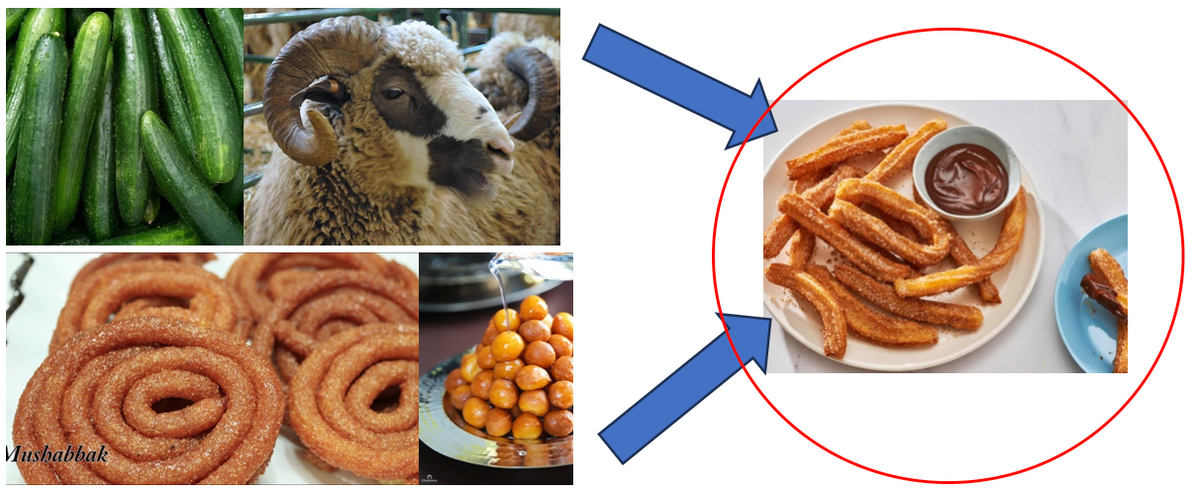
A better way to understand churros is to consider the long tradition of fried dough in the Iberian Peninsula. During and after Islamic rule in Spain, fried-dough preparations were already part of the region's culinary traditions. Dishes such as zalabiyya and mushabbak show that frying dough was an established technique in the wider Mediterranean and Islamic world.
But we cannot call every old fried-dough recipe a churro. According to food historian Ana Vega Pérez, the churro is a distinct food can instead be traced to Madrid in the mid-19th century. From there, it spread throughout Spain, with different regions developing their own forms and methods.
Over time, churros became associated with a simple dough made mainly from flour, water, and salt. The dough is pushed through a churrera and fried in hot oil, creating the ridged shape familiar today.
By the early 20th century, churros had become an established part of Madrid’s food culture, commonly enjoyed alongside coffee or hot chocolate. What began as a relatively simple fried dough had evolved into a familiar ritual, one that connects the churrería, and everyday life.
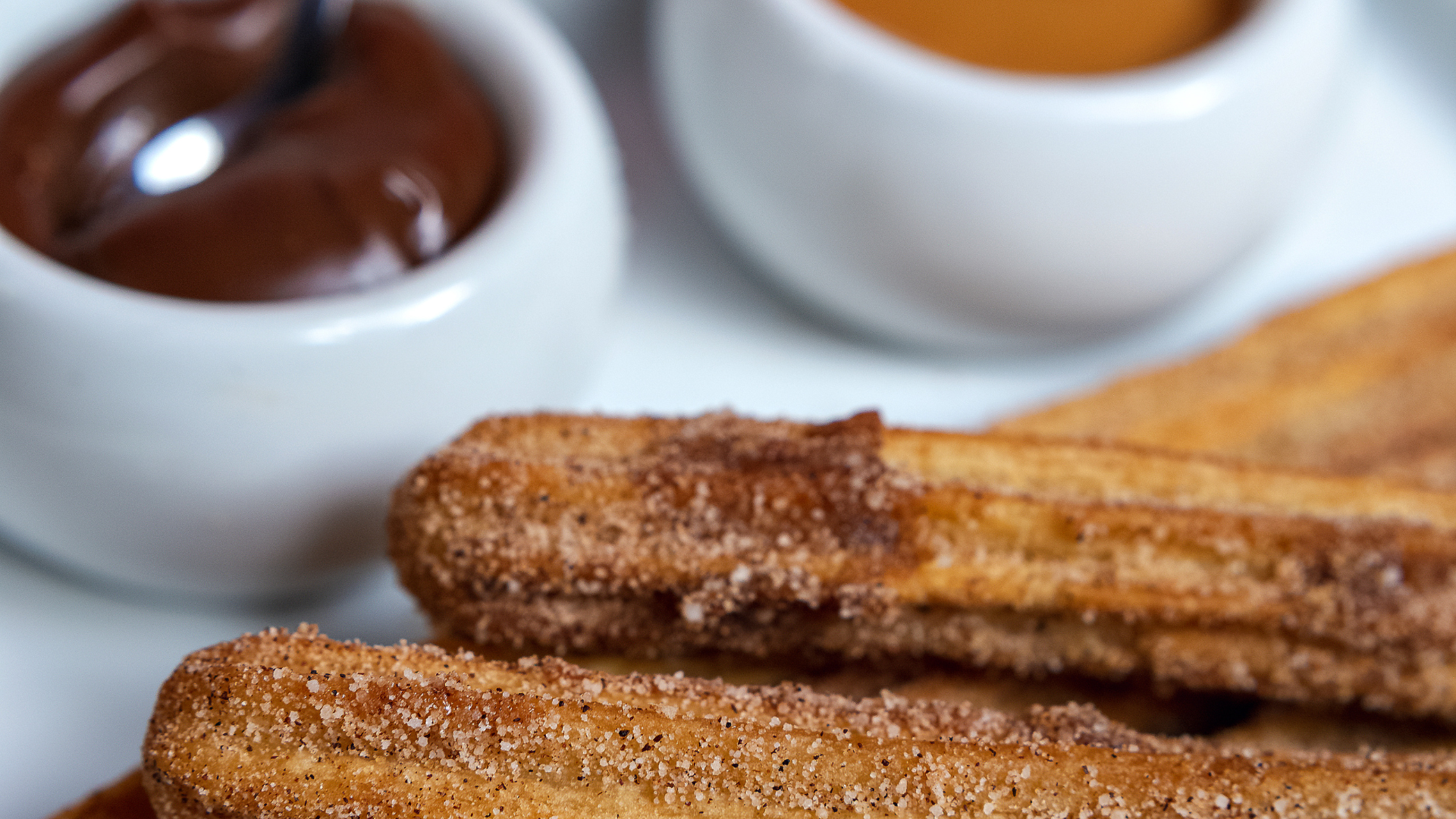
Today, we bring that tradition to Detroit with DTROITR. We keep the spirit of the classic churro while making conscious choices about our ingredients, offering thoughtfully selected dipping sauces, and pairing them with great coffee.
The experience doesn’t end at the counter; explore DTROITR for our coffee, gear and merchandise.